 The Simbu Festival
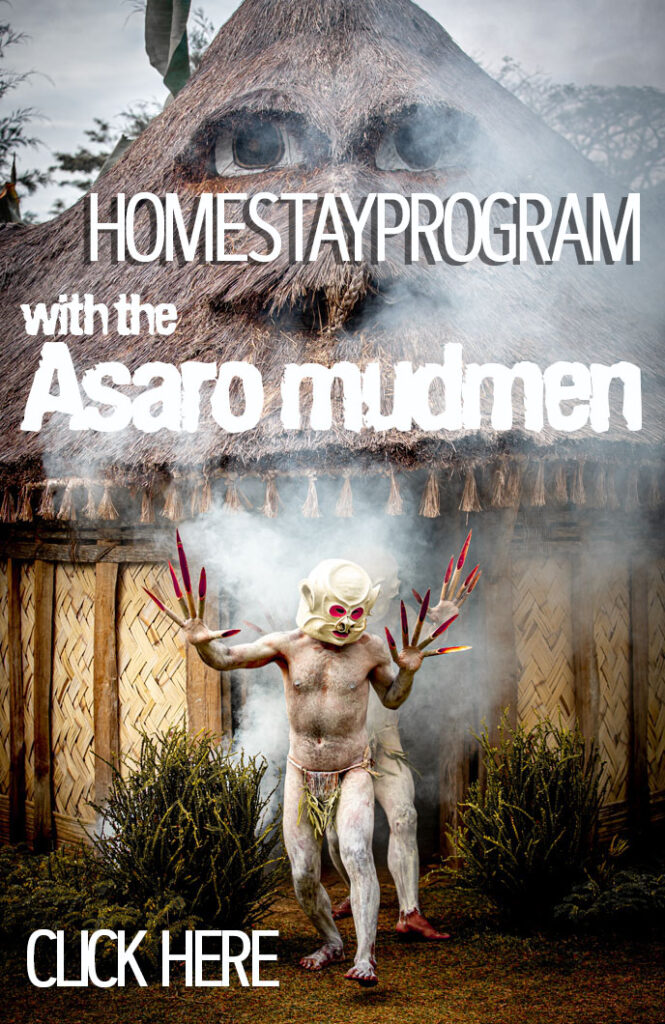
 One of the tribe’s members is missing, again. He went to forage herbs and berries in the forest and never came back. Many people have been killed by the big bear monster in the cave, roaming the top of the mountain, an area which is taboo for all tribes’ members to visit. A brave group of young men have an idea. We use mud and pigment to dress up as skeletons and try to find out what happened to our lost family members. They enter the cave mimicking dead bodies and when they see the bear monster they lie down between the other skeletons of victims to camouflage themselves. They wait, the monster returns to its liar with a dead body in its mouth. The tribe crew awaits silently and patiently for it to fall asleep. Then …. They attack with all the spears and arrows they brought to the fight. The monster is killed. Victory is ours. The heroes return to the home village, and they are treated as brave warriors and show the decapitated head of the Bear Monster.
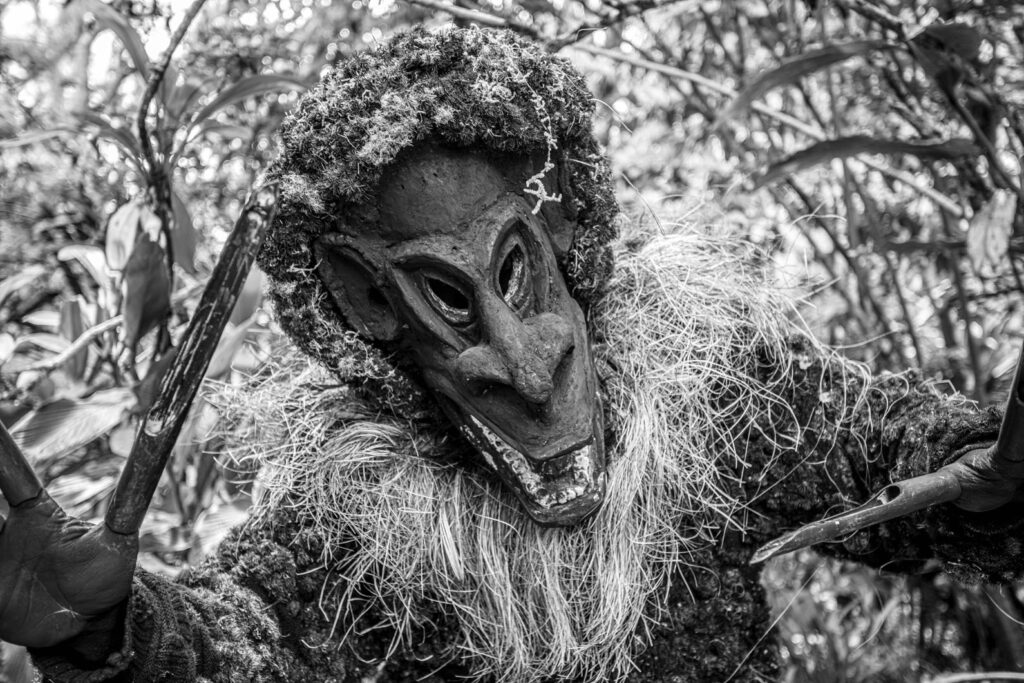
Now we can hunt and gather again in peace. Our community will be safe,
This is the show that most visitors get to see when they visit the Skeleton Tribes of Chimbu. A small play designed to show the reason why they dress up as spooky skeletons. Arriving in the village camp our guide Caspar said we can take some photos immediately while he would take care of our dinner. We drove about two hours from Goroka, one of the big towns in the western Highlands where we landed from our domestic flight from Port Moresby, the capital of PNG.
Of course, it started raining the moment we halted at the town’s entry point on the main road and 5 boys had their war paint already done for the photo-shoot. I asked for an empty barn or place where we could hide for the weather and start making portraits. We brought some Godox AD200 TTL Pocket Flash Kits and a 4 by 5-meter piece of black cloth as a background. They seemed to relax more and had fun during the two-hour photo-shoot, and we tried some funny positions, showing the skeletons on a dark background and even used the earth tones of the barn to have some vintage photographs, with a very eerie atmosphere.
Shooting 8 hours a day is tiresome, so I decided to call it an early night after dinner. The actual residence we stayed at was only about a 5-minute walk from the barn. The tribe build one Bungalow in a Traditional Tribe house, with two beds and a separation cloth in the middle to offer privacy for me and Rob, my fellow photographer on duty.
The next day we woke up quite early around 6 AM, the locals were already applying their paint for the next shoot, we were quite happy with their enthusiasm and probably not aware of why the morning light is important to us to photograph in natural and golden morning light. We took some snapshots doing their work. Self-decoration in rural Papua New Guinea is associated with sing sings and local festivals to reinforce their membership as individuals of a group or clan.
Today synthetic colors are used in Papua to paint the bodies and faces, but in Pre-Colonized New Guinea a combination of sand, splinters of basalt, river mud, and crashed shells were used for decoration and paint. Various animal teeth, boars’ tusks, or sharpened bird bones were used to apply the paint. Today the bilas, or body ornamentation, are done mainly with local dyes mixed with oil to attend traditional shows, where each group can win prize money from the organizers for being the best decorated or colorful/original tribe. The second part is creating entertainment shows for tourists and photographers visiting the villages, like yours truly. However, tourism at the Skeleton village hasn’t really kicked off at all. The local chief, Alphonso, who became a very good friend later, when he joined us for the rest of our trip, mentioned we were only the third and fourth photographer visiting their area.
This year the Skeleton tribe did not visit the famous Goroka Show, however, they still do the Mount Hagen Sing Sing every year, a mere two hours’ drive from the village.
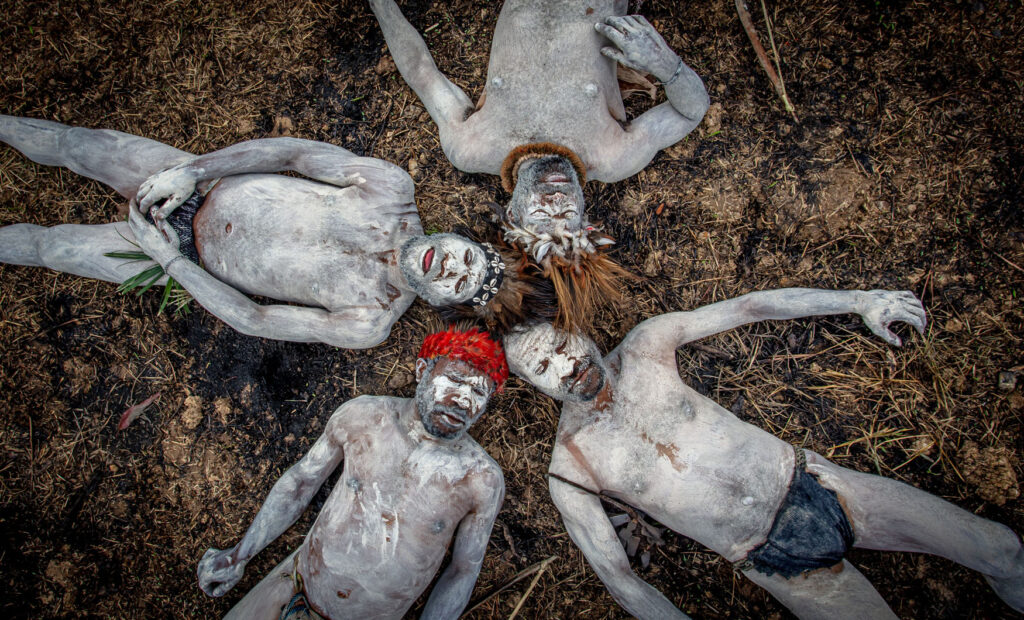
We proceeded to walk down the hill were Alphonse said a small waterfall was present, which I was immediately interested in having it as a background to make more group shots. Some locals made some smoke with dry leaves and branches in the background to create some atmosphere
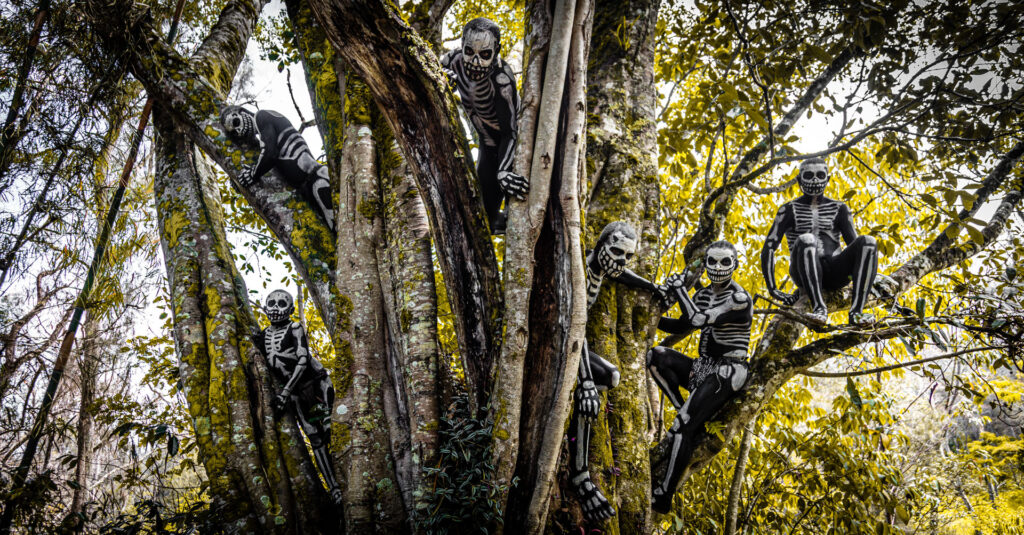
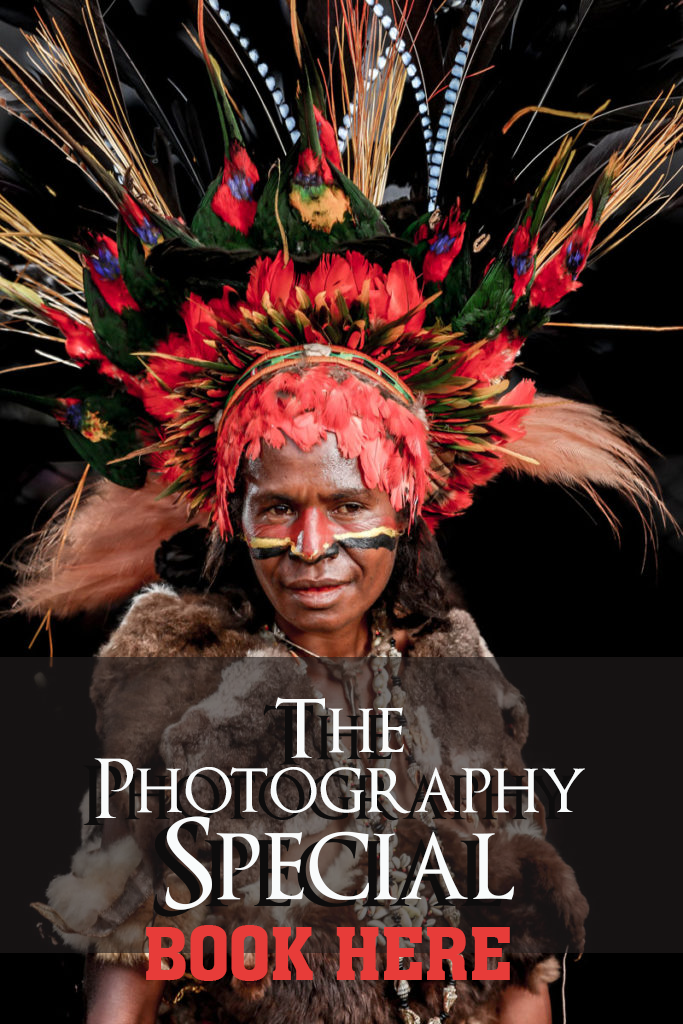
The rest of the day some excellent pictures were taken with many members of the tribe, the skeleton people climbing a huge rainforest tree, skeleton kids reading books, the ladies with colorful head-dress decorated with the feathers of the local bird of paradise and many other native birds and two amazing medicine doctors even came to visit in full native dress to have their pictures taken.
I guess the local news spread around and on day 2 even more people showed up to see what was happening in the compound of Mr. Alphonse. He must have had a good feeling about what we were doing and started to invite many people to cooperate in our shooting sessions. We finished the second day with a small afternoon walk around the small villages and see how the locals really live and dress when they are not in festive attire. Every house had pigs and in Papua a pig is a sign of wealth. Our local chef, the daughter of Mr. Alphonse made amazing food and created healthy steamed dishes on a big variety of local vegetables and chicken meat. My contribution is making Spaghetti Bolognese in the evening for me and Rob to consume as a bit of variety from eating vegetables every day. Not that we didn’t like that but to have an Italian pasta dish to break the daily steamed food was a welcome change.
(In cities like Goroka people are crazy about fried KFC copy restaurants frying the meats in greasy oils, a taste completely new to them and loved by many who try it. Let’s hope this doesn’t become the habit, and they stay with their original steaming techniques.)
Alphonse daughter looked at how I boiled the pasta, made a sauce in combination with a lot of mushrooms and carrots, and finishing up everybody was eager to have a taste from this exotic dish. I made enough for the whole group to try a bit out. I wonder next year if she still remembers how to make it, the problem is the ingredients like pasta and tomato pulp are only available in Goroka, a three-hour drive away.
The Chimbu tribes, who speak a local dialect called Kuman would have a great future and have a lot to offer to visitors who enjoy a cultural experience. The way for Alphonse to proceed, in my opinion, is going green, build a few more bungalows and start welcoming visitors to his amazing spot in the highlands. Once you are invited to a local tribe there is no safer place to be. Papua has the name of being a dangerous place but this is more present in the big cities. We do recommend your inter-village connections during the daytime just not to taunt the dangers at night when more scams happen. Locals would block a road by cutting down a tree and then charging you for cutting it up and freeing the way. A friendly and creative way of being robbed. But this would happen mostly in the nighttime. After a few group photos we headed to our next destination, Mount Hagen, and we were nicely surprised Alphonso decided to join us. Our minivan had a few extra empty seats, so he was more than welcome. We were a bit sad to go and our visit was too short. We were tired but fulfilled about our photos we were able to make and left with a good feeling that we certainly would be back next year.

Tobias says:
It is my dream to visit this amazing Tribe, hope I can join your trip in 2022, regards from Germany.